Hunt For Lempad Returns Art to Bali, by Sara Schonhardt

Bali, Indonesia – bringing together the work of one of Bali’s most accomplished artists was a job cut out for a detective. It took years of investigation that involved digging through archives at museums in Europe and the U.S. and tracking down private collections equally scattered.

“It’s just tracking step by step, following the pieces of the puzzle,” said Soemantri Widagdo, the chief curator at Ubud’s Puri Lukisan Museum, host to an extraordinary exhibition of art by I Gusti Nyoman Lempad, much of which has not been seen in his birthplace of Ubud on Bali for generations.

It showcases mostly pre-World War II drawings that made their way overseas in the hands of art collectors like Margaret Mead, an American cultural anthropologist, and Gregory Bateson, a British anthropologist and social scientist. In doing so, it tells the story of a man who reinvented himself late in life and helped to spread tales about Balinese culture far beyond the island’s beaches and rice paddies.

The artist known simply as Lempad was already well respected in Bali as a renaissance creator-–crossing into architecture, sculpture and cremation towers-–something known in Bali culture as an undagi. When he began sketching, he was already in his 60s, and most of his work was created for Westerners, not a local audience.

Most of the collection at the museum comes from the archives of the American Museum of Natural History and the U.S. Library of Congress. A 424-page book of more than 560 drawings was also produced to coincide with the exhibition and launched at its opening in late September.


Lempad Gusti NyomanMr. Widagdo says he hopes the book might draw out people who have undiscovered Lempad works in their possession. He estimates that there are more than 1,000 drawings in total. It was an unexpected tip-off Mr. Widagdo received in 2011 that helped intensify his search, which took off with a call that a Lempad had been discovered in Austria. From there, Mr. Widado followed the breadcrumbs to Leiden, Germany, and went one by one to the different museums in the city. In 2013, a researcher there told him he’d heard there were also some drawings in Sweden. Mr. Widagdo used that tip to track down a photograph of an exhibition in Sweden that showed displays of Lempad’s artwork. He says he is particularly proud of that find because it required so many dots to be connected. In total, Mr. Widagdo’s search took more than six years of travel and digging. Getting the drawings back to Bali was equally difficult, since most of the pieces are in fragile condition. “We were lucky enough to bring most of them that we wanted,” said Mr. Widagdo, referring to the 98 pieces that are part of the Ubud exhibition. Mr. Widadgo, who is now retired, says he would like to do another exhibition that includes new drawings, but he realizes it could take another six or eight years of searching. The current exhibition will end this weekend, but he hopes it has gone some way toward reinvigorating Lempad’s work and making it accessible to young Indonesians. “Lempad is a singular artist in Bali and I think he’s the most important artist in Bali,” said Mr. Widadgo. Because of his talent and connection to Ubud’s royal family in the early part of the 20th century, “he was able to distill all this knowledge of the culture. He could hear these legends that most people weren’t privileged [to hear]. To me, he’s a genius.”
Wall Street Journal, 20 Nov. 2014.

Gusti Nyoman Lempad, by Adrian Vickers

The recent collaborative book, Lempad of Bali (Singapore: Editions Didier Millet, 2014) is probably the most important work yet published on a single Balinese artist, and it has been a great pleasure to be part of it, along with Bruce Carpenter, the late John Darling, Hedi Hinzler, Kaja McGowan and Soemantri Widagdo. 

Gusti Nyoman Lempad was legendary not only as a radically different artist form the 1930s, but also as the architect who created Ubud, and for his longevity. While there are different estimates of his age, at his death in 1978 he was either 116 or 106. Two other books on Lempad have also come out this year. Although neither of these has much scholarly weight, they do illustrate the range of work of Lempad and his school, which mainly consisted of his family.

I was asked by the instigators of the project, Soemantri Widagdo and Bruce W. Carpenter, to help out with the captions, in particular with identifying the narratives that Lempad depicted. This proved to be a lot more than I had originally imagined, and in the process I met with a more profound set of insights into Balinese perspectives on life than I had imagined.

While a lot of people are familiar with the fine line and elegant simplicity of Lempad’s work, I only know of one unpublished engagement with his philosophy. This was a 1988 Honours thesis in my department here at the University of Sydney, by Putu Barbara Davies, who had met with Lempad and worked closely with his son, Gusti Made Sumung. 

Gusti Sumung, “the gatekeeper” as he is called in our book, provided Putu with access to a set of drawings by his father of the Japatuan story, a tale rarely told in contemporary Bali, but one which had been important in the past. Japatuan is about the journey of the eponymous hero and his brother through the afterworld, in search of the spirit or soul of his deceased wife. 

After going through hundreds of Lempad’s works, I could see the common threads in what Putu shows to be his treatment of this work, and his other visual story-telling. Lempad was concerned with gender, with attaining wisdom and power, and with moving between the world of the senses and the world beyond. In his art, the three are combined.


Lempad SiladriLempad Siladri

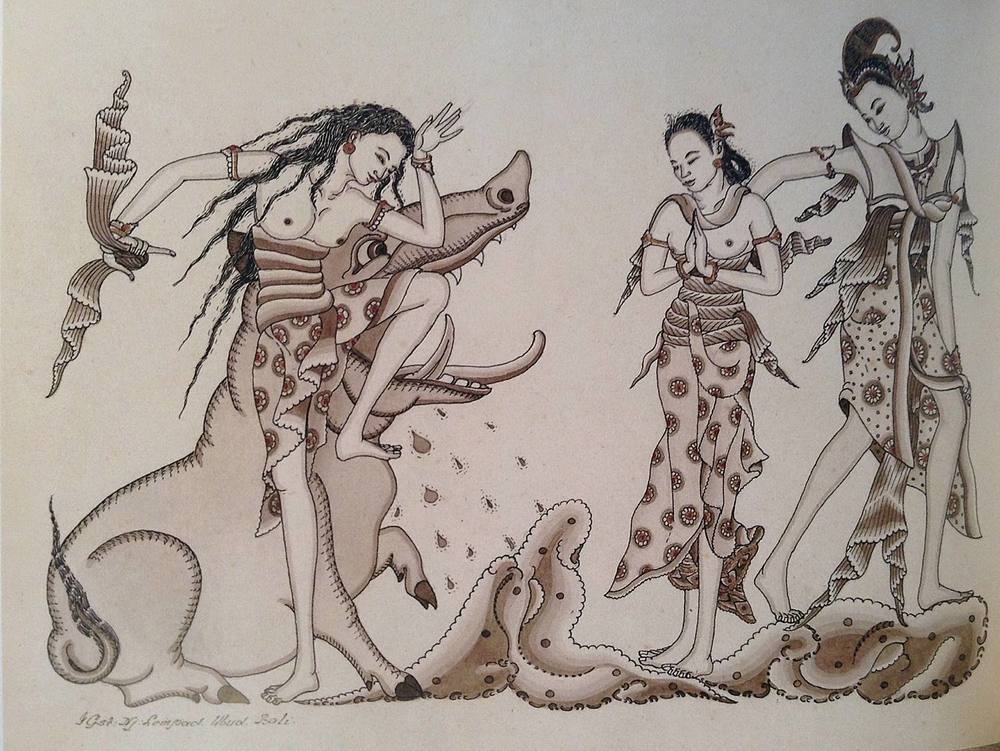
Working with Bruce Carpenter, we have classified Lempad’s work into several groupings of narratives: the Ramayana and other Hindu tales; the connected Buddhist tales of the Sutasoma and the Brayutstory; the stories such as Dukuh Siladri (or Suladri) Japatuan and Jayaprana that Balinese see as belonging to more recent history; and other folk-stories like the Tantri and animal fables. Lempad also depicted scenes of dance-drama, of daily life, erotic scenes, and of the afterlife. These categories are hardly exclusive. Sometimes it is difficult to tell which participation narrative stories come from: is the handsome hero being seduced from his meditation Arjuna of the Mahabharata, or the Buddhist prince Sutasoma? Within the Ramayana, Lempad provided images of scenes not usually depicted, for example one showing Rama and Sita with a female with subtle demonic characteristics, who could be Rahwana’s sister from the beginning of the story, or Wibhisana’s daughter Trijata protesting Sita’s innocence from the end. Some of the scenes of daily life may in fact be taken from episodes of the story of the commoner Brayut. Erotic scenes may be self-standing, or part of stories such as theJayaprana, to illustrate the love of the tragic Jayaprana for his beautiful wife Layonsari. Depictions of people assuming the female demonic form of Rangda may be representations of the Calon Arang dance-drama, or of the story from which it is derived, or of scenes where people assuming the shape of the witch queen, notably Dayu Datu in Dukuh Siladri and Gede Basur in the Basur. Such narrative uncertainty shows how little we understand the depths of Balinese narrative traditions, and how much of them are rapidly disappearing, since it is difficult to find Balinese who know all these stories in the same depth that Lempad did.

Lempad dealt with his key themes in a range of ways. Differences in gender he connected with forms of power. His two known complete versions of the Dukuh Siladri show this well. The gender contrast is not just with the wise hermit, Siladri and the evil witch, Dayu Datu. Positive female power is represented by Siladri’s adopted daughter, Kesumasari, whose husband, Siladri’s son, is shown as ignorant and fearful where she is staunch and bold. Wayan Buyar is the opposite, a greedy rich son of a powerful man. Siladri’s and Kesumasari’s power come from their distance from the world, the way that they leave the village to life in the mountain forest, which puts them in touch with the animals who save them from Dayu Datu and her forces.

Another aspect of the project is that it shows how much research is yet to be done on Balinese art. Soemantri and the others associated with the project have tracked down approximately 1,000 works by Lempad, mostly drawings on paper. Few of them are dated. The best documented are those collected by Gregory Bateson and Margaret Mead between 1937 and 1939, along with the Rolf de Maré commissions, carried out through Bateson and Mead’s friend Claire Holt. Holt also left documentation of a number of works she collected for herself, now in the Neka Museum. 

Of the many sketches by Lempad now in Ubud’s Museum Puri Lukisan, only a small portion are dated, mostly to the 1950s and 1960s. From these pieces of evidence we can group works together chronologically, for example the finer works of the 1930s, when use of colour was strongest (vermillion and gold-leaf, combined with black ink). The sketches of the late 1950s and early 1960s, when he resumed working after the hiatus of War and Revolution, seem more monumental, more reflective of his sculptural and architectural interests. But these are working hypotheses, and we have to do a lot more in terms of accurately dating his works. 

Along with this problem is the multiplicity of Lempad-like works. Many of Lempad’s works were unsigned, and the family only added signatures later. Not everything that bears his signature was by him, and while some wrong attributions may be obvious, the higher market value of Lempad’s works means that caution is required. In addition, there are clearly a number of lost works that we know only through bad photographs or old photocopies.

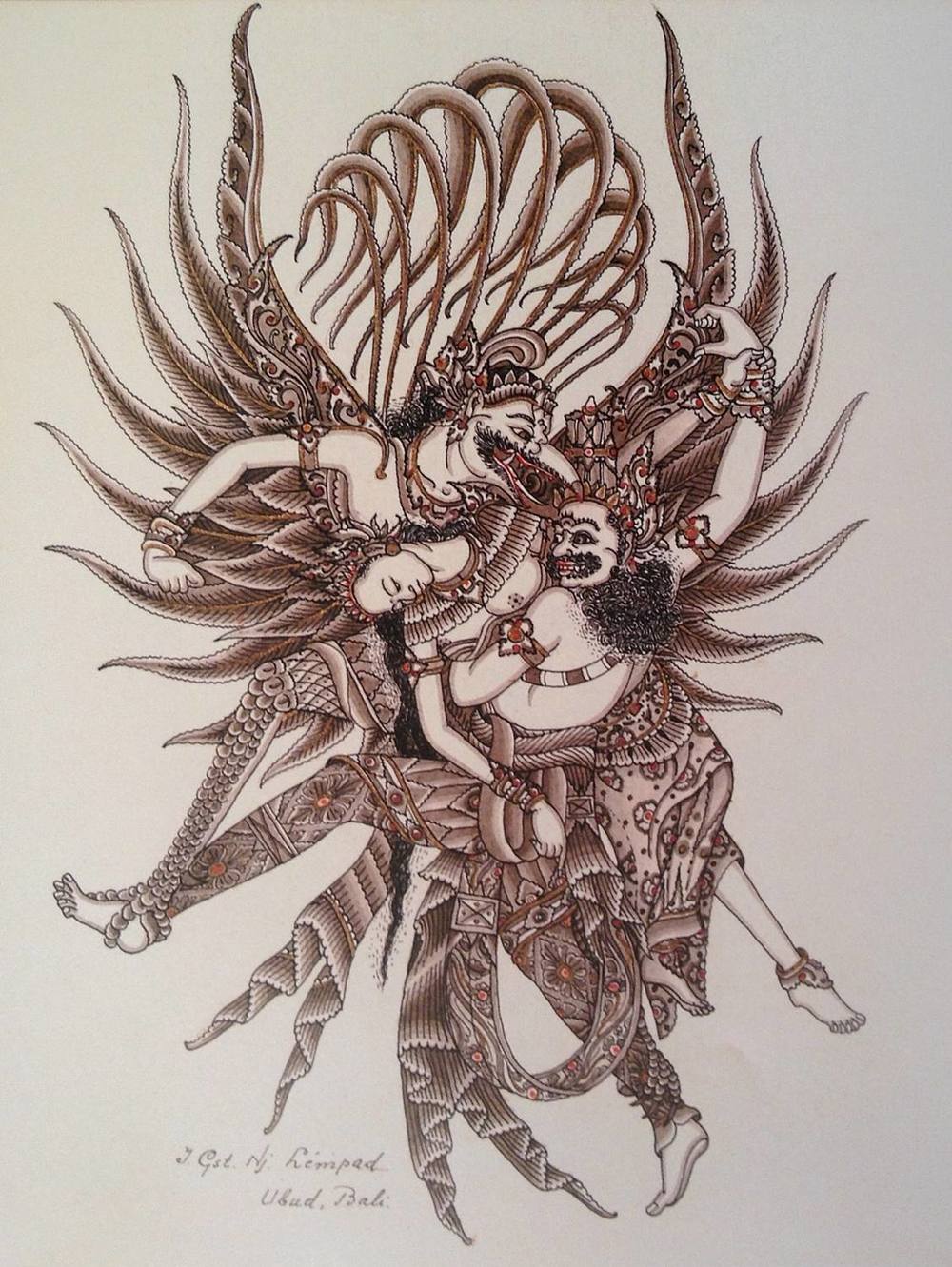
Matters of scholarship and connoisseurship underpin a more important aspect of the project. We need to know the what and when of Lempad’s works (and whether they were his), in order to understand their strangeness. There is something alienating and distant to modern Western audiences in his works. The strangeness comes in violence, sometimes hinted, sometimes graphic. This includes sexual violence, not just in the variety of Lempad’s couplings, but equally in the demonic Rahwana groping Sita as he abducts her, or the monkeys attacking the genitals of demons in the great battle of the Ramayana. Male-female relations or relations between same-sex couples are uneasy points on journeys to knowledge and power. Sometimes these journeys end badly, as in the tragic tale of Jayaprana, sometimes in attainment of a stage in life that allows the protagonists, Pan and Men Brayut for example, to be ready for the next stage of reincarnation.

Indonesia Research Blog, 20 November 2014.

LEMPAD OF BALI PUBLISHED, by Pierre Nachbaur

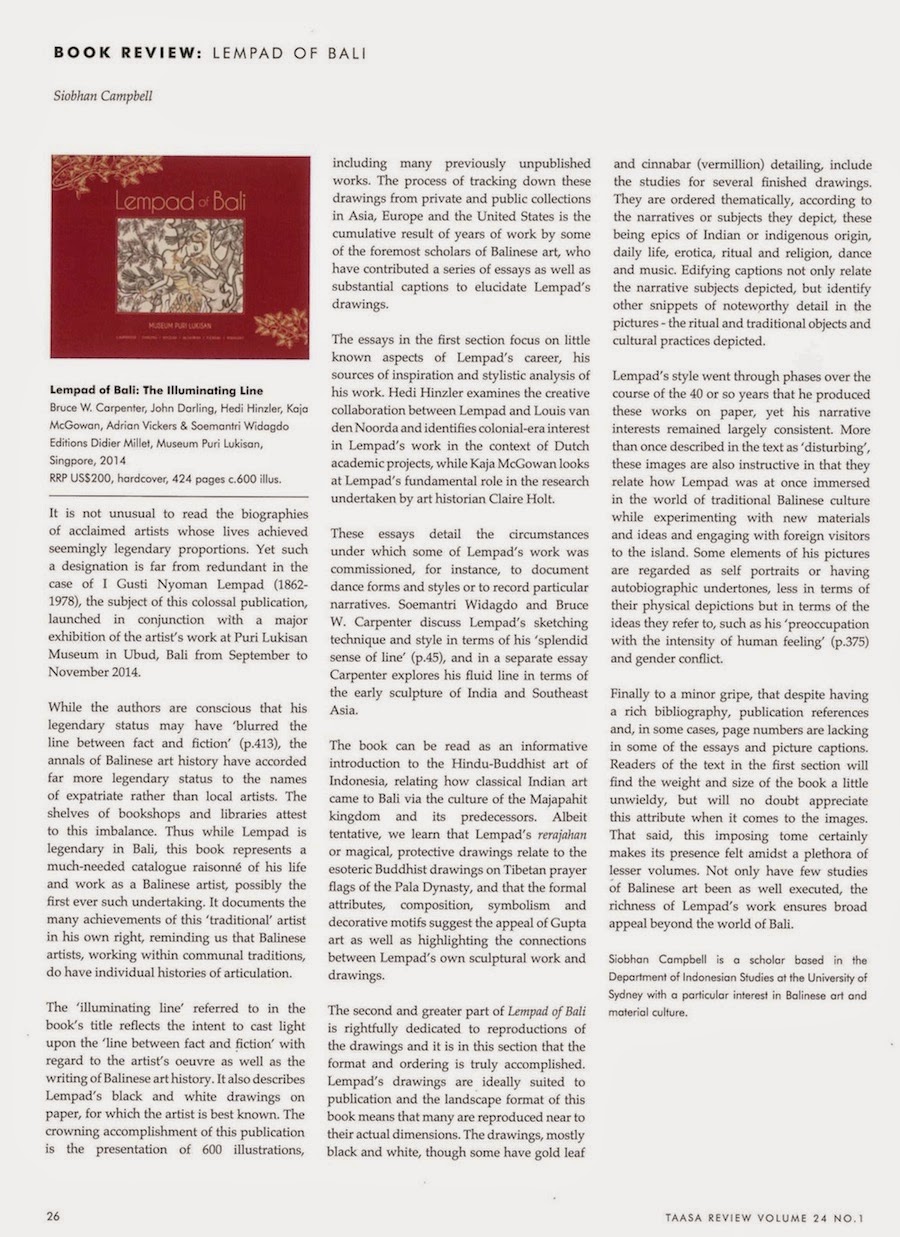
Lempad of Bali: The Illuminating Line, the first catalogue raisonné of the work of internationally acclaimed Balinese artist Gusti Nyoman Lempad (~1862-1978), was recently published to accompany the first retrospective exhibition of his drawings. The exhibition continues at the Museum Puri Lukisan in Ubud, Bali through 24 November.

At 424 pages with more than 500 reproductions of Lempad’s drawings, the large-format book is a groundbreaking work of discovery. Essays by six distinguished scholars of Bali, explore Lempad’s life, work, and death; his sources of inspiration; his drawing style and technique; and the cultural and historical context of Hindu-Buddhist stories, art, and religion related to his work. Relatively few of these Lempad drawings have been published before as much of this work left Bali in the 1930s with the departure of European and American collectors.

“Lempad witnessed Bali’s history over more than 100 years from pre-colonial times to the beginning of mass tourism. Yet his work is still so modern that it carries important lessons about the future of Balinese art and the depth of its roots in the island’s culture,” said Soemantri Widagdo, chief curator at the Puri Lukisan and a co-author of Lempad of Bali.
“Our research was a detective story. We found early drawings that have not been seen in Bali since before World War II. We were able to track down work in museums and private collections all over the world. One knowledgeable person led to another. Library and museum archives and auction records revealed surprises and lost drawings. It was exhilarating to find surviving work across four continents.”

The exhibition and book “brought Lempad back to Bali,” said David Irons, an independent curator who works with the museum. “More than 1000 people were at the opening, including hundreds of artists young and old, who came from all over the island to welcome him home.”


Lempad Sita abductionLempad Sita abduction

From Pierre Nachbaur Art

Lempad of Bali, by Bill Dalton

A towering presence in Balinese art, I Gusti Nyoman Lempad (1863-1978) was the greatest Balinese artist of the 20th century. He lived a life of mythical proportions, gaining wide recognition from the local art community as well as from foreign anthropologists, researchers and artists who lived in Bali during the 1920s and 1930s, the most revolutionary period of Balinese art.

With 400-plus pages of original images and reproductions of drawings and sketches, many never before published, Lempad of Bali is the first truly comprehensive catalogue of the artist’s life and work. Of the estimated 1000 works of art that this multi-faceted genius produced in his lifetime, this mammoth book has reproduced 600 of them, about 90% of Lempad’s total output. The great artist has finally been given his full due!

Recognizing his son’s artistic talent before the age of 10, Lempad’s father Gusti Mayukan, a traditional architect, put his young son to work assisting him on his many building projects. In his teens, Lempad’s family fled their home in Blahbatuh when the father was threatened with exile. The family found political asylum with the royal family of Ubud. The timing was perfect as Puri Ubud was in the process of rebuilding, and their skills were welcomed.

Refined, humble and introverted, Lempad belonged to a class all his own. The great artist lived a long and fruitful life doing not much else but producing a body of work that has been unmatched. Still drawing at 100 years old, his life story reads like a gilded fairy tale. He lived from the age of omnipotent feudal princes to that of astronauts. Gathering his family around him in his final moments, he died a conscious death in 1978 at the age of 117.

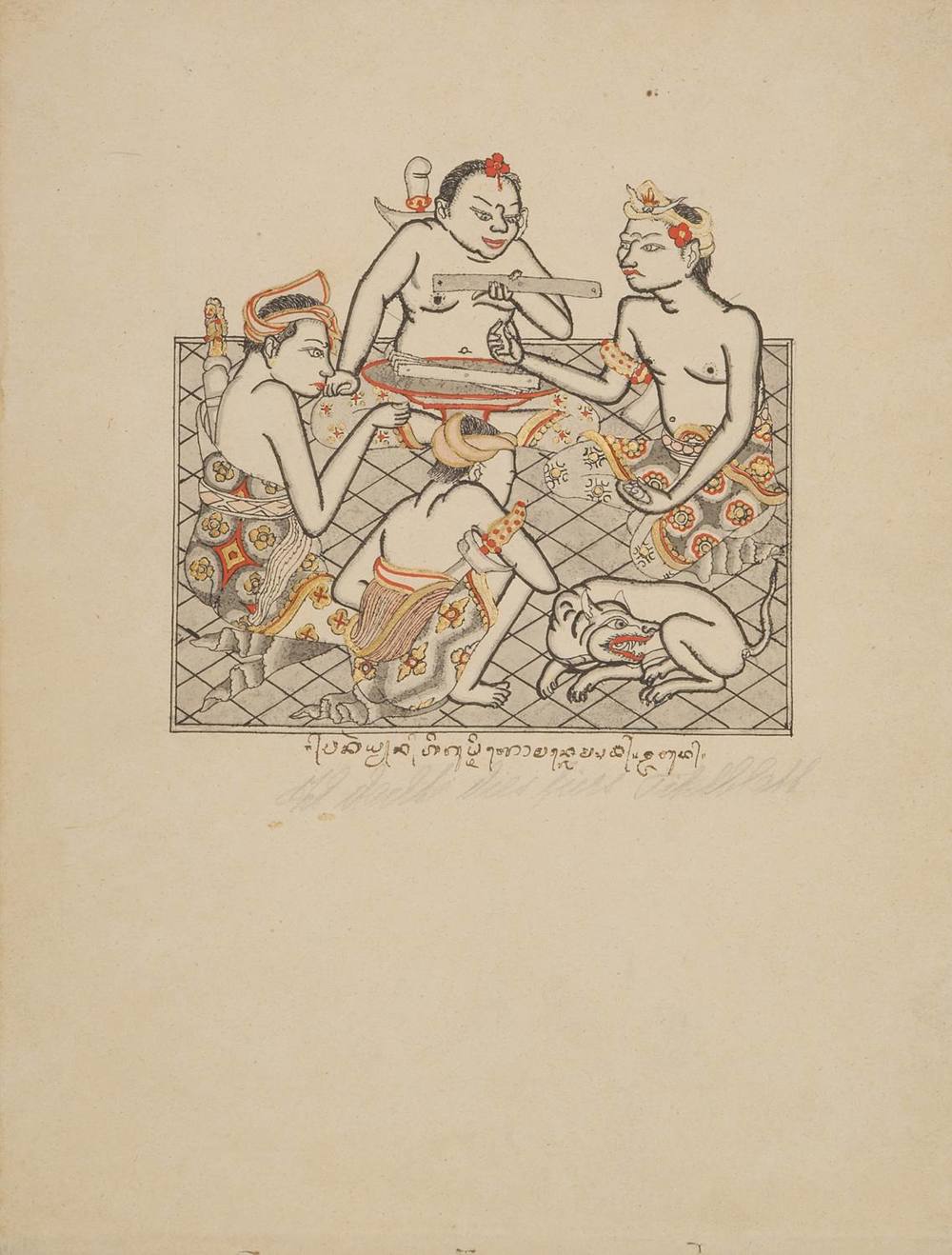
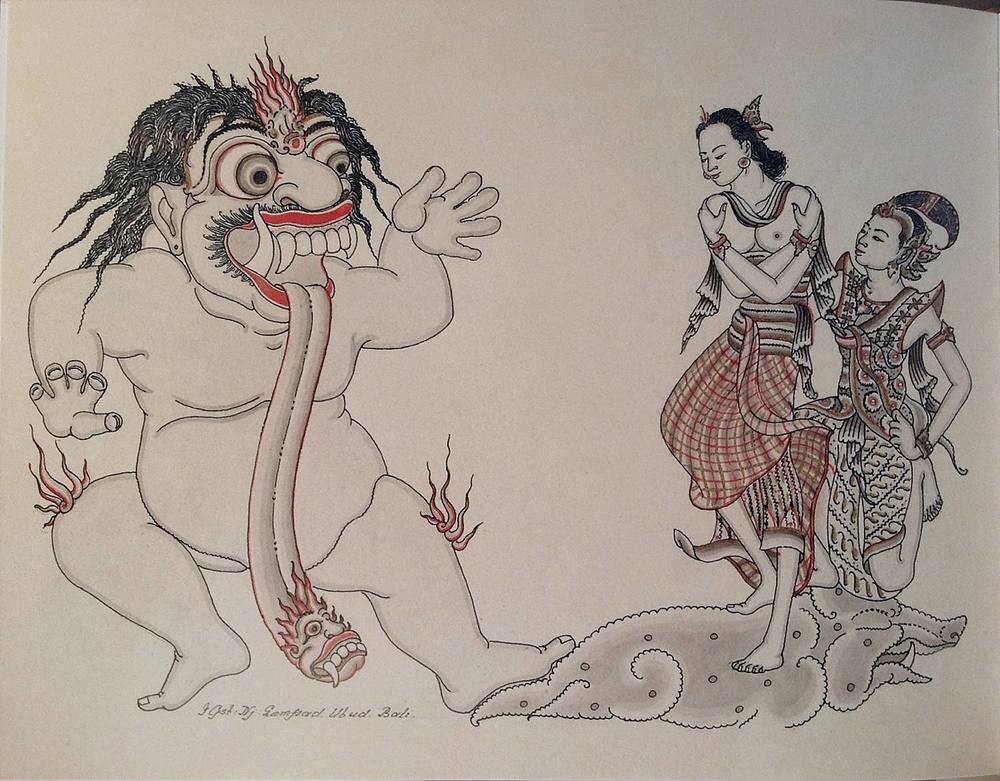
Considered one of the first modern Balinese artists, Lempad’s greatest gift was his wild and fertile imagination. Don’t expect in Lempad an Albrecht Durer or M.C. Escher. Starting in the 1920s, Lempad attracted notice for his line drawings that were a futuristic adaptation of figures from the wayang pantheon. Though I couldn’t imagine his repulsive sharped toothed demons, fierce witches with lolling tongues, dragon-headed spirits, tortured souls with trailing intestines, giant roosters with umbrellas and animal-headed babies up on the walls of my home, they nevertheless are mesmerizing to look at. Lempad also created works depicting “happy natives” going about their daily lives – slaughtering pigs, grilling satay, weaving textiles, placing offerings, suckling infants, delousing relatives, carving doors, getting married and working rice fields – which were in high demand by Westerners who had little understanding of religious imagery.


Lempad bawangLempad bawang

Bali Advertiser, 4 March 2015

LEMPAD OF BALI – Another Look, by Rio Helmi

Saturday 20th September saw the launch of yet another major book on legendary Balinese artist I Gusti Nyoman Lempad, this time penned by six highly regarded experts on Balinese art and culture. Intrigued, we went along to the press conference at Puri Lukisan Museum in Ubud.

After decades of drought, suddenly it’s raining Lempads. This time the Puri Lukisan Museum, the original art museum of Ubud started in the early 1950s under the patronage of Ubud’s royal family of Puri Saren, has published a weighty tome:  Lempad of Bali, the Illuminating Line. There is a special and unique significance to this sponsorship, as the artist I Gusti Nyoman Lempad had a very close and special relationship with his royal patrons, the Tjokordas of Ubud., and also as theMuseum Puri Lukisan is closely linked to the Pita Maha creative art movement of the 30’s of which Lempad was an important part.

Kicking off the press conference on Saturday was Tjokorda Putera Sukawati, who pointed out that prior to this movement there were no “artists” as such in Bali – creative people worked in their socially definedroles as undagi  (a traditional amalgam of artist, artisan, architect, and cultural conoisseur) and pragina (traditional dance and theater performer); their work was to serve the public by using their creativity in temples and palaces. He also pointed out that Lempad would frequent the palace to listen to readings of traditional scriptures, and so was steeped in the mythic lore of Bali. Tjokorda Putera pointed out that the 30s marked the first real intersection with the outside world for the Balinese.

The need for, and significance of, a publication of this nature cannot be understated, as those close to Lempad were imminently aware.  As Bruce Carpenter pointed out, this book had always been one of the great wishes of the late I Gusti Made Sumung, Lempad’s son, and of the late John Darling, who was something of a Sumung protegé.

A few months ago, another large book book, Lempad,  was published by Picture Publishers of the Netherlands. It is to Lempad’s credit that two large books could be dedicated to his work in such quick succession. Indeed, Lempad could be said to be the most internationally significant Balinese artist to date. As curious about it as I was, I put the question to Bruce Carpenter: what is the substantive difference between Lempad of Bali, the Illuminating Line and the previous book, Lempad?


Lempad LontarLempad Lontar

Exhibition of master drawings by I Gusti Nyoman Lempad extended to 18 December 2014

Pre-World-War-II work from U.S. and European collections accompanied by release of first catalogue raisonné of Lempad’s drawings. Ubud, Bali, 21 September 2014 – “Illuminating Line: Master Drawings of I Gusti Nyoman Lempad” opened at the Museum Puri Lukisan in Ubud, Bali, on 20 September. The exhibition runs until 18 December 2014.

The exhibition is accompanied by Lempad of Bali: The Illuminating Line, a 424-page catalog, written by six leading international scholars of Balinese art. The large-format book includes 600 illustrations; 500 of them are reproductions of Lempad’s drawings and sketches. Many of these have not been seen publicly since the 1930s and have never been published before.

More than eight years in preparation, this will be the first retrospective exhibition and catalogue raisonné of Lempad’s drawings on paper, which were his principal creative output during the last 50 years of his long and productive career. For the exhibition, the museum selected 70 works focusing on those created in the 1930s, most of them borrowed from museum and private collections in the Netherlands, Austria, Sweden, and the United States.

Our ‘Lempad of Bali’ exhibition is a labor of love for the museum,” said Puri Lukisan Director Tjokorda Bagus Astika. “Gusti Nyoman Lempad spent his entire working life in Ubud; he was a founding member of the Pita Maha group of artists that redefined Balinese painting in the 1930s, and he was a co-founder, co-designer and builder of the Puri Lukisan from 1953 to 1955,” when he was in his nineties. His murals of farmers sowing and reaping rice and performing rituals related to its culture are the first works that visitors see at the entrance to the museum’s first building.


Lempad TwalenLempad Twalen

“Lempad and his work are central to the museum’s mission of promoting and preserving Balinese painting and sculpture from Pita Maha artists and their heirs,” said Soemantri Widagdo, the museum’s curator and principal organizer of the exhibition. “All of Lempad’s work draws deeply on Bali’s oldest traditions, yet he is a completely modern artist whose work speaks clearly to Bali and the world today.”

I Gusti Nyoman Lempad’s 116-year lifespan encompassed the history of Balinese art from the pre-colonial era, incorporation into the Netherlands East Indies in 1906, the Japanese Occupation, the Indonesian Struggle for Independence, the early Republic and New Order which brought a new wave of tourism. Probably born around 1862, he was the son of a talented traditional artist serving the raja of Bedulu in the Gianyar regency. In the 1870s his family fled to Ubud and were given asylum by Prince Tjokorde Gede Sukawati.

The young Lempad’s talent was soon recognized and encouraged by the ruling family. Trained as an undagi, an architect of temples and palaces with deep understanding of the ritual and spiritual requirements of building Bali’s sacred spaces, he developed early renown for his ability to bring life to the complex carving of stone and wood that define these spaces and the major objects of Bali’s Hindu-Buddhist ritual life.

Lempad’s uncanny draftsmanship was a crucial part of his success as a planner, builder, and sculptor of stone friezes of temples, palaces, and homes, as well as the towers and other ephemeral works of cremation art that ensure successful release of the spirit of the deceased in Bali.

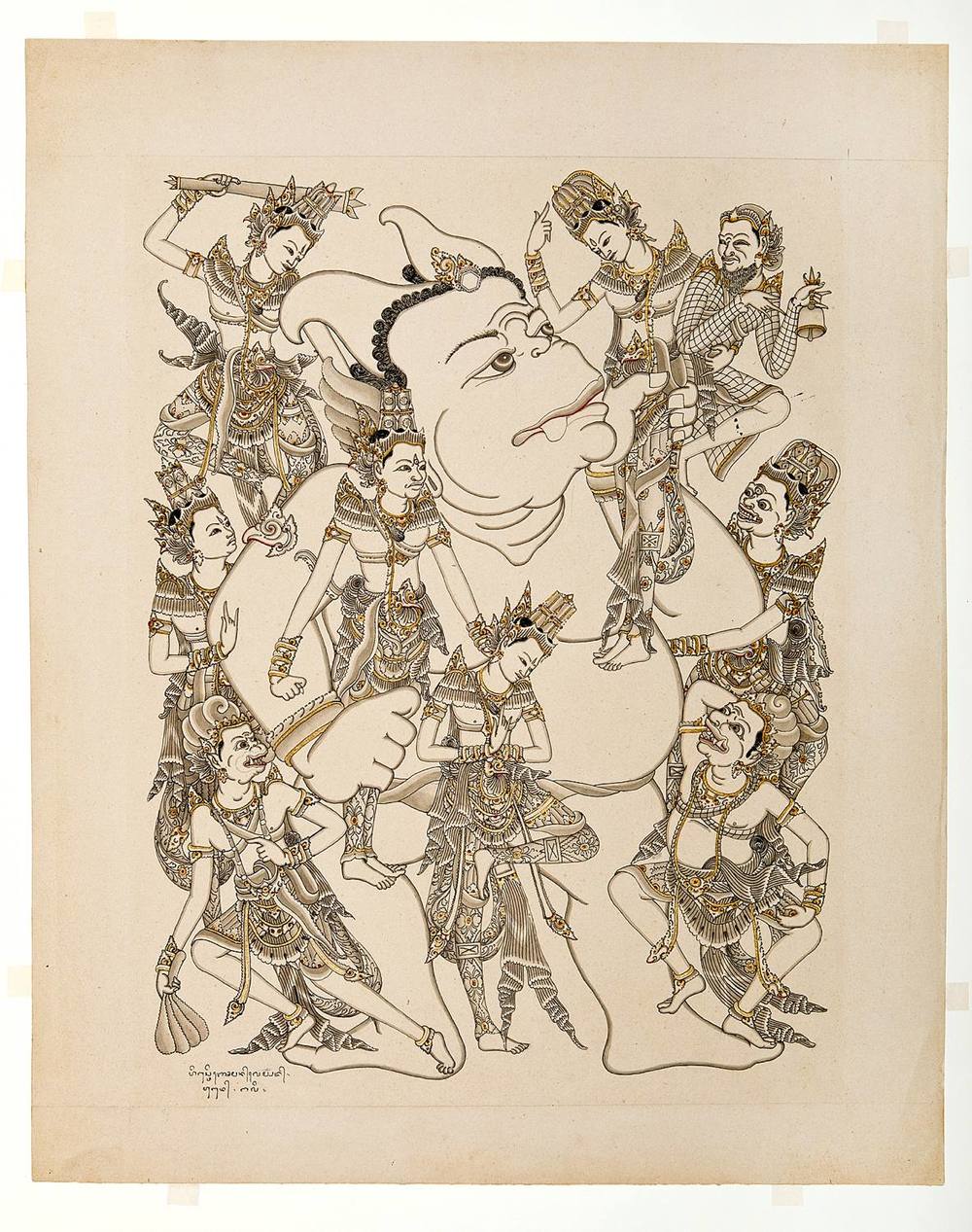
Beginning in the late 1920s, Lempad launched himself on a new and unexpected career when he began producing the exquisite works on paper for which he is best known today. Using the traditional technique of drawing with a bamboo brush and black ink on art paper given to him by Rudolf Bonnet and Walter Spies, a constant stream of foreign admirers became the first connoisseurs of this mature artist’s singular ability to illuminate Bali’s legends and capture gods, heroes, demons, and lovers with his uniquely penetrating and assured line.

“We knew when we began planning the ‘Illuminating Line’ exhibition in 2006, that we must find work that had not been seen in Bali since before World War II,” said Soemantri. “It’s been a detective story. Many collectors were well-known names in Bali’s mid-20th century history. Most Lempad work owned by Colin McPhee, Margaret Mead and Gregory Bateson is now in U.S. institutions. We also knew where in the Netherlands to find the work Rudolf Bonnet collected. But other work had to be tracked down in museums and private collections all over the world. One knowledgeable person led to another. Research in library and museum archives and auction records revealed surprises and lost drawings. It was exhilarating and time-consuming to find surviving work across four continents.”

“All of us who worked on the Lempad of Bali catalogue and exhibition see it as a beginning, a new starting point, in understanding and appreciating the unique quality and legacy of this 19th and 20th century master. Lempad is important beyond Bali and our greatest hope is that this exhibition will inspire new research and new discoveries about his life and work.”

Exhibition Catalogue
Lempad of Bali, to be published in September 2014 by the Museum Puri Lukisan, is the first comprehensive catalogue of the artist’s life and work. At 424 pages with 600 images including 500-plus reproductions of Lempad sketches and drawings from the 1920s to the 1970s, the large-format book (36 by 27.7 cm.) features biographical and interpretive essays by major world scholars and close observers of Bali’s art and culture, several of whom knew Lempad personally.

Catalogue project manager and co-author, Bruce W. Carpenter, who first dreamt of realizing a major book on Lempad in the 1980s in discussions with Lempad’s son I Gusti Made Sumung, said, “the aim of the book and exhibition is to forcefully demonstrate the relevance and greatness of this mammoth artistic figure whose achievement transcends borders and time. So, too, it is a gift to the Balinese whose memory of this master has begun to fade 36 years after his passing. I believe no one alive today has fully understood the extraordinary range and quality of Lempad’s work as so much of it left Bali in the 1930s, and then Indonesia was essentially closed to outsiders from 1941 to the mid-fifties by war and revolution and their aftermath. I am astonished by the totality of what we have discovered – or recovered. I think my co-authors share that feeling.”

In addition to Carpenter, author and co-author of more than 18 titles on Indonesian art, culture and history, the other five contributors to Lempad of Bali are the late John Darling, who wrote and co-directed the acclaimed film “Lempad of Bali” (1980) with Lorne Blair; Hedi Hinzler, a leading Dutch authority on Balinese art, music, and culture; Kaja McGowan, Cornell University professor and co-author of Ida Bagus Made: The Art of Devotion; Adrian Vickers, University of Sydney professor and author of Balinese Art: Paintings and Drawings of Bali, 1800-2010; and Soemantri Widagdo, also a co-author of Ida Bagus Made and curator of the exhibition.

Participating Institutions and Principal Collectors
The American Museum of Natural History (USA), the Dance Museum (Sweden), the Library of Congress (USA), the National Museum of World Cultures (Netherlands), the Vienna Ethnological Museum (Austria) and more than ten private collectors have all loaned work to the exhibition. Much of it was purchased directly from I Gusti Nyoman Lempad in the 1930s by Colin McPhee, Margaret Mead, Gregory Bateson, Rudolf Bonnet, Christiaan Hooykaas, Helene Potjewyd, and Rolf de Maré.

Contact:
For further information, please call Soemantri Widagdo at +62 812 8221 3926 or email to swidagdo@yahoo.com.
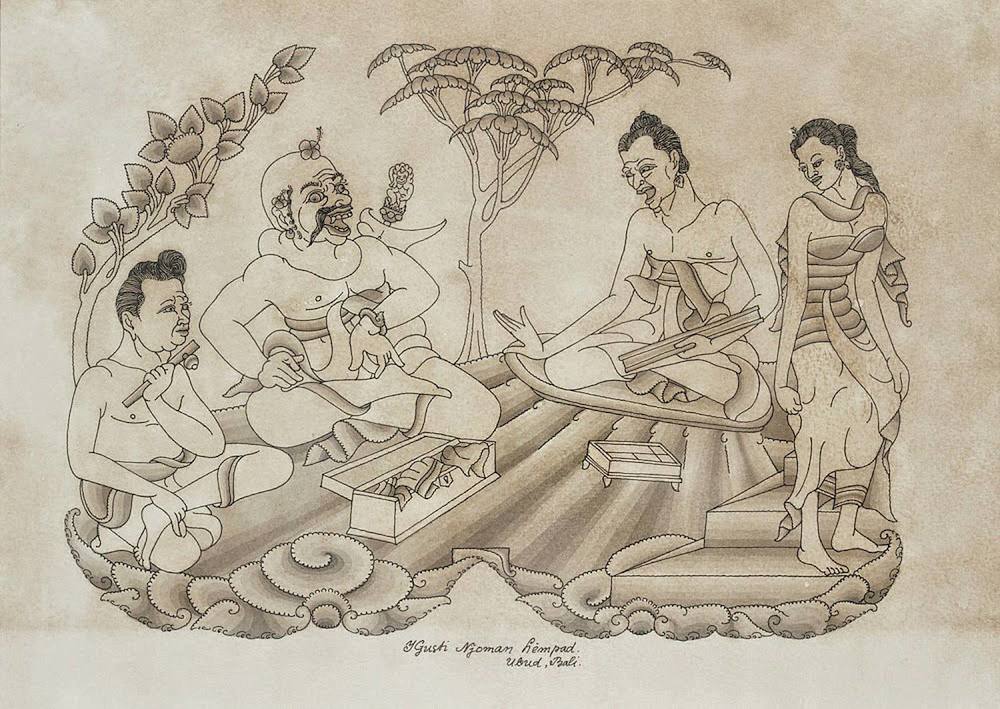
Definitive study of Gusti Nyoman Lempad’s life and work to be launched at exhibition opening

Lempad of Bali: The Illuminating Line, is the first comprehensive and definitive examination of the life and work of internationally acclaimed Balinese artist Gusti Nyoman Lempad. Published by Museum Puri Lukisan in Ubud, Bali in collaboration with Editions Didier Millet of Singapore, the book launch will take place at the opening of the museum’s exhibition of Lempad’s drawings on 20 September. The exhibition will run through 24 November.

“The idea of this book was born in Lempad’s Ubud home only a few years after his death in conversations with his son Made Sumung,” said Bruce Carpenter, co-author and project manager. “Gusti Nyoman Lempad was a co-founder and leader of the Pita Maha artists collective that revolutionized Balinese painting in the 1930s, creating modern forms while remaining deeply grounded in Bali’s Hindu-Buddhist faith and culture.

“Lempad not only helped conceive the Museum Puri Lukisan with Rudolf Bonnet in the 1930s, he was also co-creator and designer of the finished museum which opened in 1956. He was a modest titan of Balinese modernism while remaining utterly traditional in his values.”

At 424 pages with more than 500 reproductions of Lempad’s drawings, the limited edition, large-format book is a groundbreaking work of discovery. Relatively few of the total of Lempad’s drawings have been published and most of the early originals that survive have not been seen publicly since the 1930s when they left Bali to European and American collections.

Soemantri Widagdo, chief curator of the museum, principal organizer of the exhibition, and a co-author of Lempad of Bali, said, “We knew well before 2006, the museum’s 50th anniversary year, that we must do the Lempad book and exhibition. But we also knew it would require years of research to find many of the works that left Bali 75 to 80 years ago in the years before the start of World War II.

“Our museum’s mission focuses on preserving the work of the Pita Maha artists and inspiring the artists who are the heirs of Pita Maha and will create the modern expression of Bali’s art,” Soemantri said. “Lempad died 36 years ago. Younger generations need to know his work. This remarkable artist witnessed Bali’s history over more than 100 years from pre-colonial times to the beginning of mass tourism. Yet his work is still so modern that it carries important lessons about the future of Balinese art and the depth of its roots in the island’s culture.”


Lempad Siladri

The book includes essays by six distinguished scholars of Bali. Their focus includes Lempad’s life, work, and death; his sources of inspiration; a meditation on his drawings collected by Cornell University anthropologist Claire Holt; his drawing style and technique; and the cultural and historical context of Indian and Southeast Asian Hindu-Buddhist art and religion related to his work.

Following the essays are sections or “galleries” of Lempad’s art divided by themes reflecting the depth and breadth of his interests and creativity. These range across stories from the Ramayana; other Hindu and Buddhist tales; indigenous Balinese legends and folk tales; the pulse of daily life and, by extension, his “Kamasutra” chronicling human erotic activity; ritual and religion; and dance and music. The galleries with legends and folk tales are especially noteworthy as they ‘reconstruct’ the “story cycles” of Lempad’s drawings for the first time. Each gallery is filled with dozens of Lempad drawings and sketches from museums and private collections in the Netherlands, Austria, Sweden, New Zealand, Indonesia, the USA, and beyond.

Carpenter, author of 20 books on Indonesia’s art and culture, said, “Lempad was renowned in his lifetime as a towering figure in Balinese arts. In the 1920s while in his sixties, he was recognized as the pre-eminent architect and stone sculptor of temples and palaces in Ubud and throughout the Gianyar region. He then started afresh in the late 1920s and began creating this monumental series of drawings, which he continued for almost 50 years.”

In addition to Carpenter and Soemantri Widagdo, the other four contributors to Lempad of Bali are the late John Darling (1946-2011), who wrote and co-directed the acclaimed documentary “Lempad of Bali” (1980) with Lorne Blair; Hedi Hinzler, a leading Dutch authority on Balinese art, music, and culture; Kaja McGowan, Cornell University professor and co-author of Ida Bagus Made: The Art of Devotion; and Adrian Vickers, University of Sydney professor and author of many books on Bali and Indonesia, including, most recently, Balinese Art: Paintings and Drawings of Bali, 1800-2010.

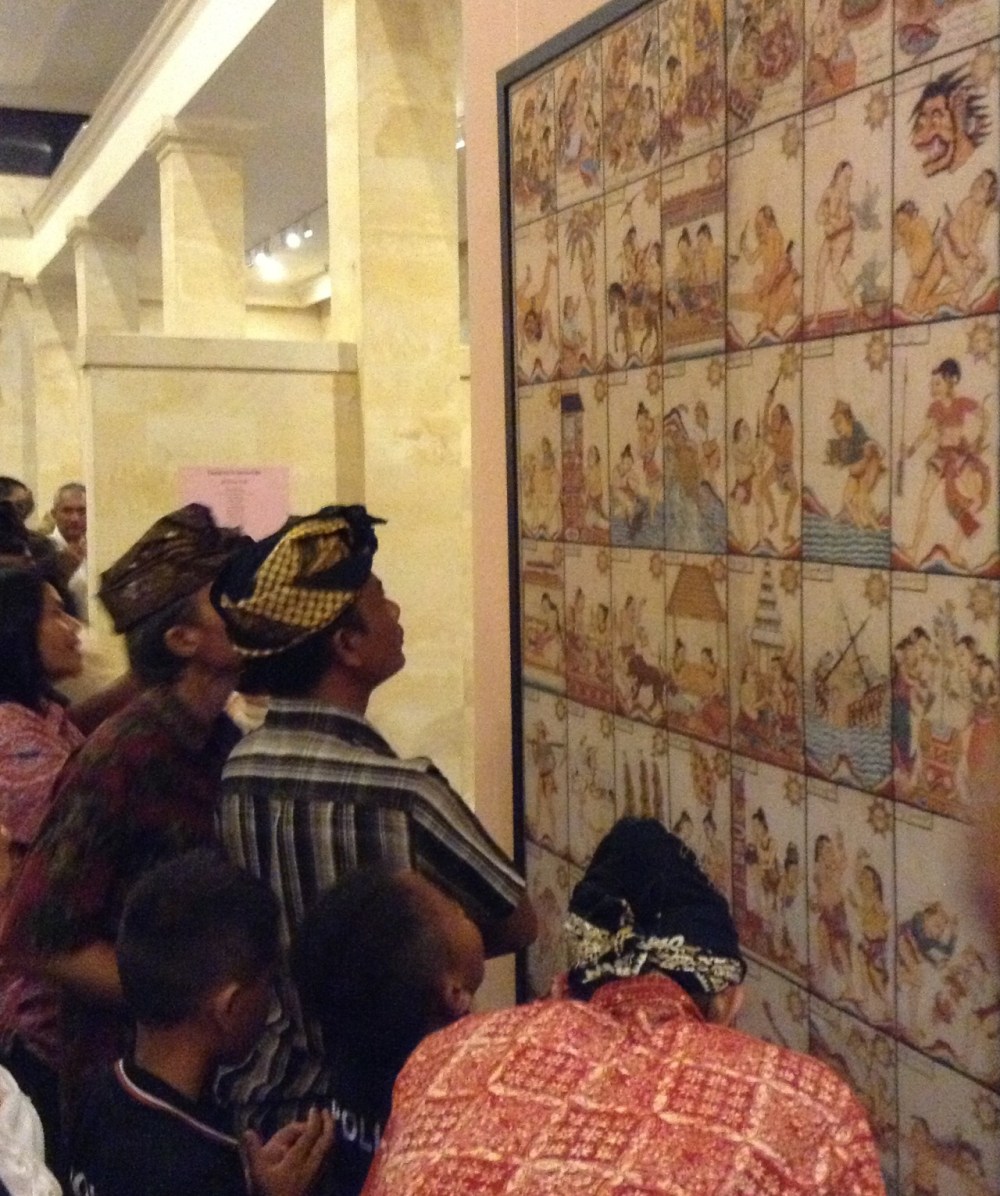
What I loved most about the opening of “Illuminating Line: Master Drawings of I Gusti Nyoman Lempad” at Ubud’s Puri Lukisan Museum last week was the sheer enthusiasm of Balinese people of all ages for the work that this timeless artist created.

Balinese Calendar (Palelintangan) commissioned from I Gusti Nyoman Lempad by Canadian composer Colin McPhee in 1937, and donated to the American Museum of Natural History, ink, cinnabar, gouache and gold leaf on bark-cloth, 257 x 160 cm.

If you’re in Bali or nearby…

… do please come to the opening of “Illuminating Line: Master Drawings of I Gusti Nyoman Lempad” and the book launch of Lempad of Bali: The Illuminating Line on Saturday at 6:00 PM at the Museum Puri Lukisan, Jalan Raya, Ubud. 

One hundred Lempad images, most of them not seen in Bali since before WWII, are now hanging at the museum.

We’re expecting 1000 people; we plan to feed them all; and we’re hoping you can make it, too.

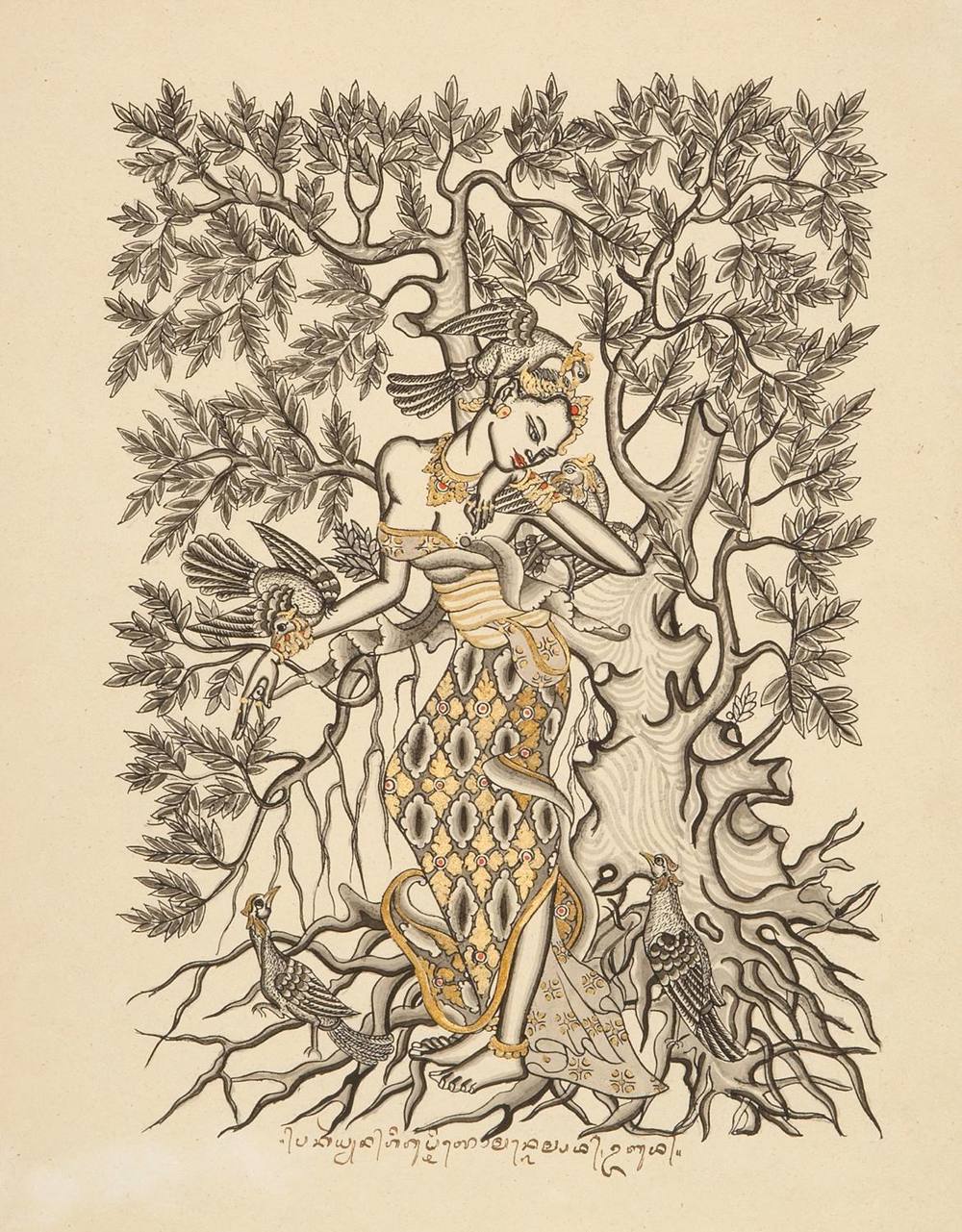
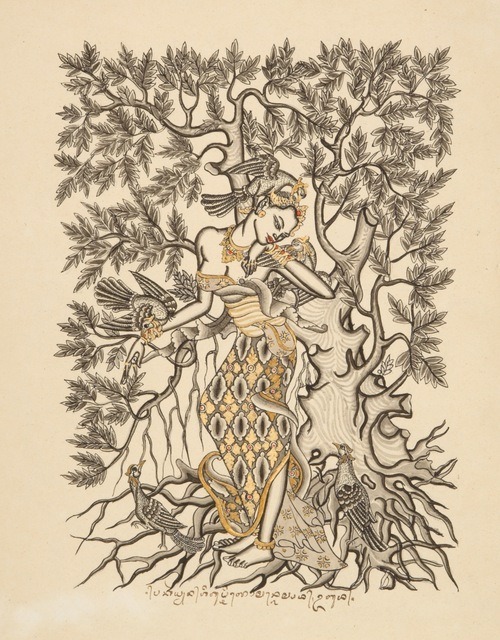
The drawing below, “Ni Bawang Decorated by the Birds of the Forest,” is from the collection of the Vienna Ethnographic Museum. A detail appears on the cover of Lempad of Bali.

image